Strong Workforce Outcomes Start with Strong Teaching
By Dr. Mildred Coyne, CEO, Coyne Workforce Solutions.
Share:




In August, the U.S. Departments of Labor, Commerce, and Education released America’s Talent Strategy: Building the Workforce for the Golden Age. The Strategy outlines a clear direction for the country through employer-aligned programs, expanded apprenticeships, AI literacy, and a focus on accountability for outcomes that lead to high-value jobs.
For community and technical colleges, this national strategy speaks directly to their mission. These institutions already form the backbone of America’s talent pipeline. They prepare students for essential roles across the skilled trades, healthcare, IT, business, public services, logistics, manufacturing, and a wide range of emerging industries. The Strategy reinforces the work colleges are doing and raises expectations for what comes next.
But while national policy can create momentum, the real impact depends on what happens locally — on campuses, in classrooms, labs, workshops, and apprenticeship settings. That is where students learn, where they persist, and where they develop the skills employers expect.
And that is where we must pay close attention.
Completion Still Lags — and Teaching Quality Is Central
For many years, colleges have sought to improve student retention, often through services inspired by Vincent Tinto’s framework: advising, wraparound supports, and efforts to strengthen belonging. These investments matter, but they have not significantly changed completion rates.
National data shows that only 34% of first-time, full-time students at two-year colleges complete a Career and Technical Education (CTE) certificate or associate degree within 150% of normal program time.
This has real implications for the Talent Strategy. The national agenda emphasizes short-term, employer-aligned credentials, on-the-job learning, and more flexible routes into growing industries. These pathways only work when students complete — and when they acquire the knowledge and confidence needed to progress into good jobs.
Support services help, but they cannot replace quality of instruction as the primary driver for student achievement. The teaching experience is one of the most consistent determinants of whether students understand the material, stay engaged, and ultimately finish their program.
As colleges respond to the Strategy’s call for innovation, agility, and a renewed focus on accountability for student outcomes; — strengthening teaching must be part of the conversation. Without it, the country will continue to struggle to translate policy into outcomes.
America’s Workforce Ambitions Depend on Faculty
Workforce programs rely heavily on instructors who come directly from industry — from technicians and welders to healthcare practitioners, IT specialists, and trades professionals who bring valuable expertise. But teaching is a discipline of its own. In the classroom, faculty must manage much more than subject knowledge. These subject matter experts must engage learners with a variety of learning styles, address behaviour issues, plan and execute lessons while differentiating for wide-ranging abilities, and check understanding in real time.
These are complex, learned skills. Structuring learning effectively, guiding practice, and assessing progress are not innate — they require time, support, and the right professional development to nurture and grow.
This challenge is not new, but the Talent Strategy amplifies it. Colleges are expected to adapt quickly to employer demand, integrate AI literacy, expand apprenticeships, and deliver new credentials at pace. Faculty — especially those new to teaching — must be able to adjust their instruction just as quickly.
The Strategy’s goals cannot be met without confident, well-supported faculty. They are the people turning ambition into practice. When their teaching is strong, students learn well, progress well, and are more likely to complete.
Traditional Professional Development Isn’t Enough
Most colleges support teaching through induction sessions, annual professional development days, mentoring, or workshops. These efforts matter, but the truth is they weren’t delivering what faculty needed even before the Talent Strategy arrived.
Traditional professional development is often infrequent, generic, difficult to personalize, and hard to translate into everyday practice, especially for part-time and adjunct faculty or those working across multiple sites. It was already clear that colleges needed a more practical and sustainable approach to developing teaching. The Talent Strategy hasn’t created this challenge, but it has made it more urgent. The expectations are now even higher:
new industry-aligned credentials developed at pace
Apprenticeships and work-based learning expanded
AI literacy embedded across programs
stronger evidence of learning and completion outcomes
These demands compound the limitations of traditional professional development. Faculty need support that is flexible, responsive, and rooted in daily teaching practice — not occasional training that sits apart from it.
This is exactly where TeachingHOW2s comes in. It gives colleges the practical, scalable, day-to-day support that traditional professional development has never been able to deliver.
Driving innovation in professional development for educators across community colleges, workforce development, CTE, and broader higher education, TeachingHOW2s’ digital platform offers a practical, evidence-based approach to embedding transformative teaching techniques, supported by an integrated AI Assistant that provides real-time, tailored guidance to help faculty quickly adapt strategies to their own classrooms, labs, and workspaces.
Alongside this, its collaborative tools encourage professional dialogue and peer-to-peer learning, helping educators share best practices and build collective expertise. HOW2 makes professional learning an everyday, scalable, and sustainable practice that supports staff in creating engaging and effective learning environments where both learners and practitioners can thrive.
The Talent Strategy sets the direction. HOW2 gives colleges a practical way to deliver on it by making evidence-based teaching easy to understand, apply, and share — reducing workload, building confidence, and ensuring consistent, high-quality instruction across the organization.
This is not an add-on. It strengthens the everyday practice that determines whether students succeed. It gives colleges a practical way to respond to the expectations of the Talent Strategy.
HOW2 supports faculty in several key ways:
- Practical, evidence-based techniques teachers can use immediately
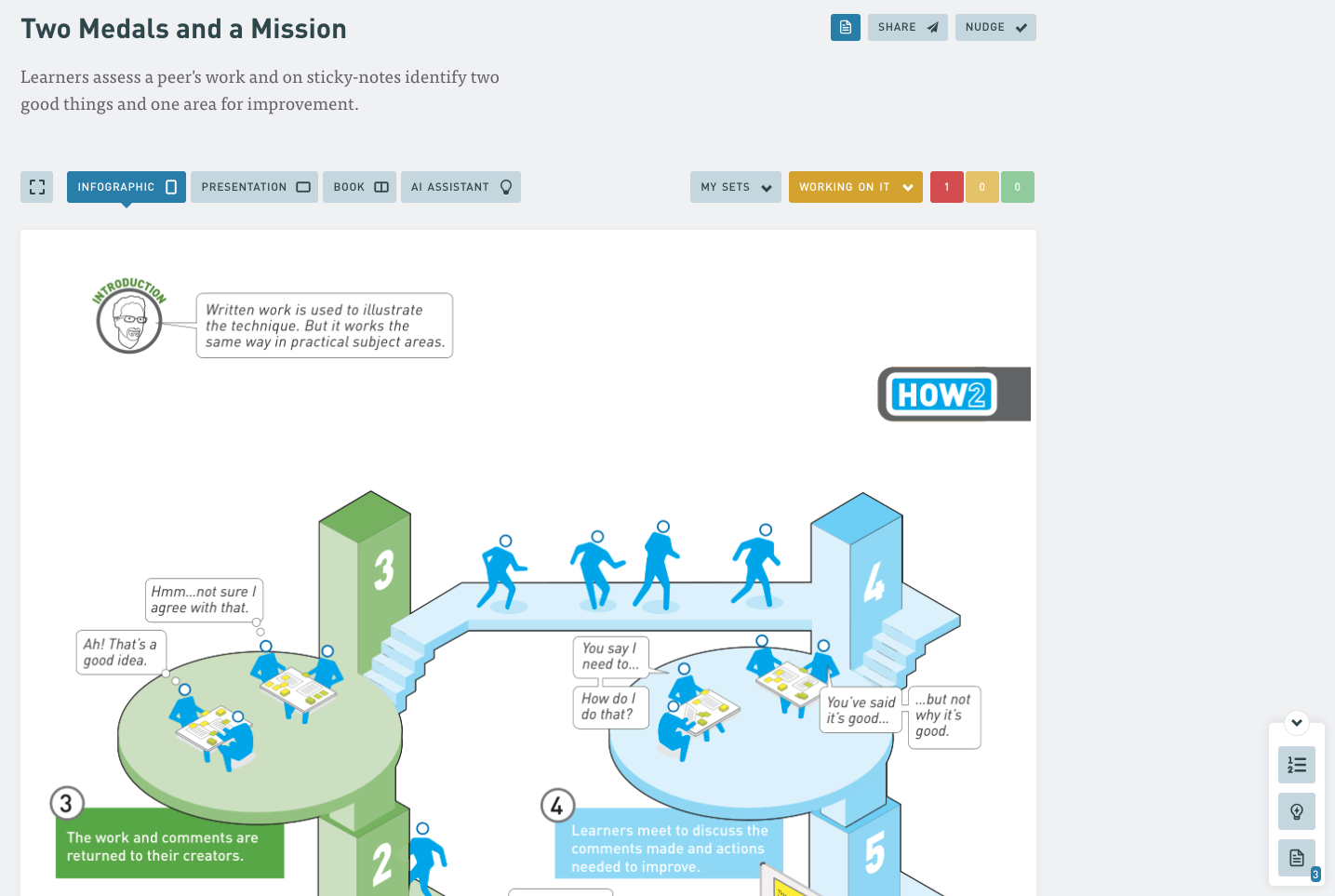
Clear, step-by-step visual guides turn evidence-based strategies into bite-sized, easy-to-follow steps. They help faculty — including those transitioning from industry — quickly grasp what a technique is and build confidence in using it with their learners.
- Real-time, contextual coaching through HOW2 + AI
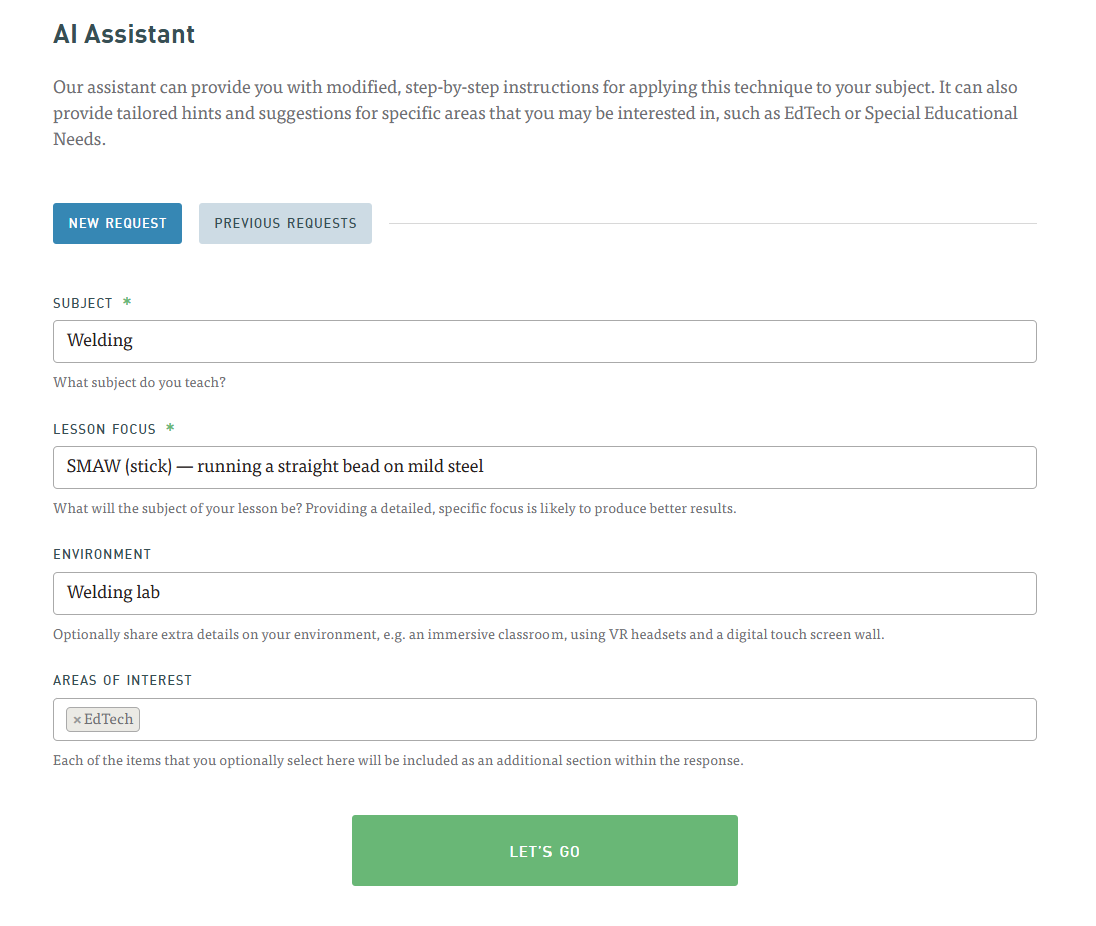
The integrated AI Assistant supports staff in adapting strategies to specific subjects, lesson topics, and teaching environments — from labs to workshops to hybrid classrooms.
- Consistency across full-time, part-time, and adjunct faculty
Everyone works from the same evidence-based toolkit, helping colleges ensure that students experience high-quality teaching across all programs and campuses.
- A shared language of practice
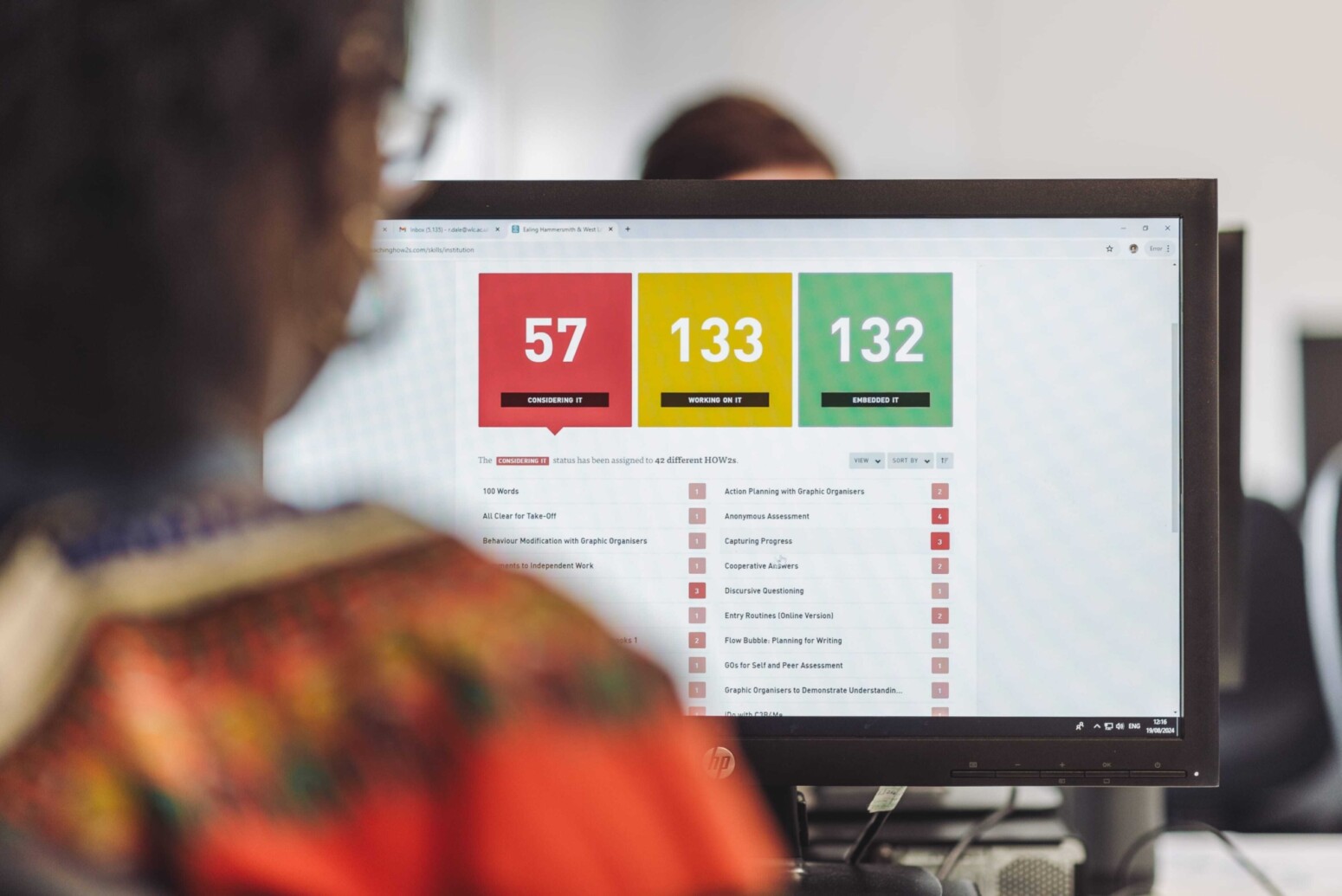
HOW2’s collaborative tools make peer learning part of everyday practice. Features like Skills Exchange and Notes help faculty see how colleagues are using strategies, sharing adaptations, and building collective expertise across programs and campuses. This strengthens professional dialogue and supports the development of genuine communities of practice.
- Alignment with quality and improvement processes
Observation feedback becomes developmental rather than evaluative. Faculty receive clear, practical next steps that are directly linked to evidence-based techniques.
HOW2 does not replace leadership, coaching, or institutional strategy. Instead, it strengthens all of them by making evidence-based pedagogy a shared, practical, everyday reality.
A Call to Action for Colleges
Expectations for workforce outcomes are rising. Colleges are being asked to deliver credentials of value, ensure students gain relevant skills, and support progression into well-paid jobs. These goals are achievable — but only if teaching is strong, consistent, and responsive to the needs of employers.
Investing in faculty is not separate from workforce development.
It is the foundation of it.
When faculty are well-supported, students learn more effectively, complete their coursework at higher rates, and enter the workforce with greater confidence. This is how colleges contribute to the national vision: not through policy statements, but through the quality of instruction delivered every day.
Conclusion
America’s Talent Strategy sets an ambitious path for the country. But its success depends on what happens in classrooms, labs, and learning environments across the nation. Policy can create opportunity; teaching determines whether students can seize it.
In my work across the sector, I have seen many approaches to improving teaching, but few that make such a consistent difference for faculty and students. HOW2 has proved to be one of the most practical and scalable tools for strengthening everyday teaching across workforce programs.
The Strategy provides the direction. Faculty bring it to life. And colleges that invest in practical, evidence-based teaching will be the ones that deliver the outcomes the country now expects.
If you’d like to continue this conversation or learn more about the HOW2 approach, you can connect with me on LinkedIn or follow TeachingHOW2s for updates and insights.
Meet the Author
Dr. Mildred G. Coyne is the CEO of Coyne Workforce Solutions (CWS), where she advises colleges, workforce and economic development agencies, and employers on building strong talent pipelines and improving workforce outcomes. With more than 30 years in higher education and workforce innovation, she is known for designing career pathways, credential ecosystems, and data-driven strategies that strengthen both teaching and student success.
Before founding CWS, Dr. Coyne served as Senior Vice President of Workforce Education & Innovation at Broward College, where she expanded CTE programs, apprenticeships, and corporate training, and launched Broward UP, a nationally recognized place-based workforce model. A long-time leader in the Florida College System, she founded the Council for Workforce Education and has led major state and federal workforce initiatives.

View Features and Benefits
Latest Insights
More Insights