Inside Wigan & Leigh’s Teaching & Learning Academy
Ofsted-praised ITE. Connected professional learning. Confident vocational teachers. HOW2 helped W&L achieve them all.
Share:



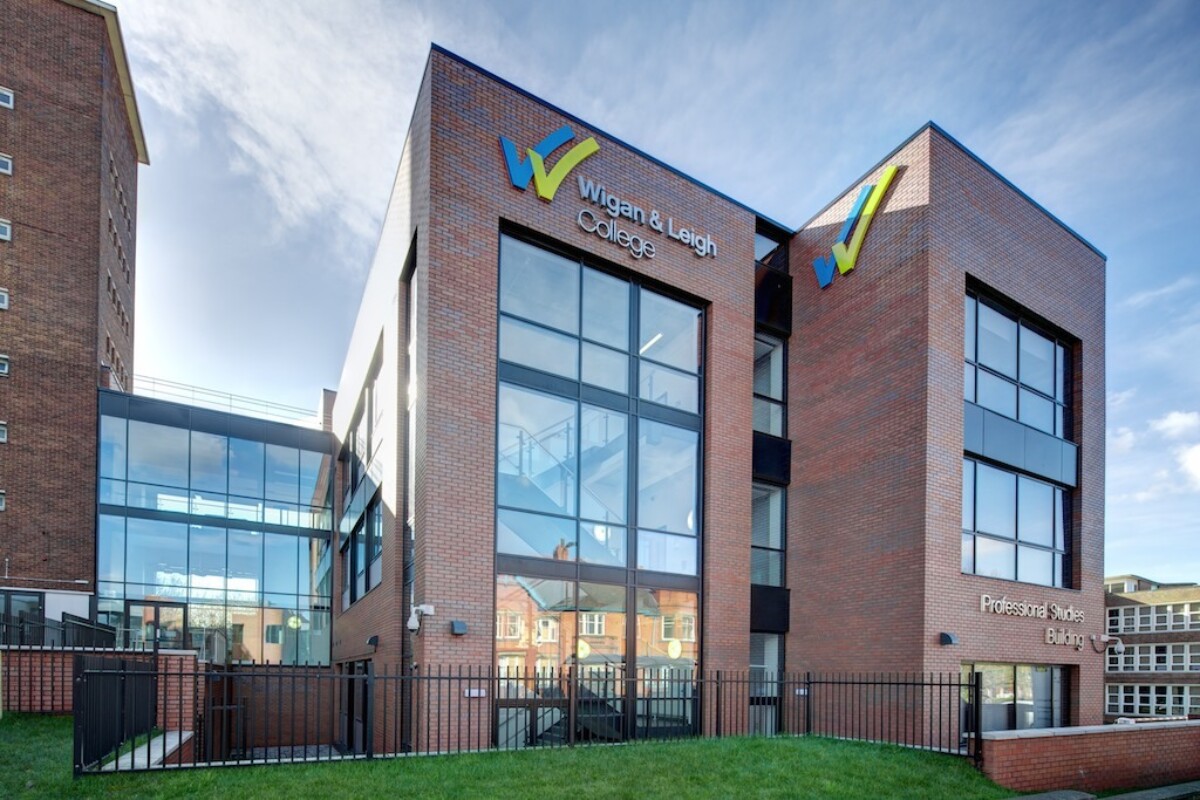
In recent years, Wigan & Leigh College has focused heavily on supporting industry professionals entering education as part of a wider effort to strengthen teacher recruitment, development and retention across the organization. In 2021, the college established its Teaching & Learning Academy (TLA), creating a dedicated structure to support educators throughout the teaching journey — from Initial Teacher Education (ITE) and early career support through to coaching, CPD and quality improvement.
Built around the idea of developing a strong teacher pipeline, the Academy supports vocational educators entering further education from industry through to qualification, while creating a more joined-up experience of professional learning and support across the college. Rather than treating ITE, coaching, CPD and quality improvement as separate strands, the Academy brings them together within one shared approach to professional learning, creating what staff describe as a more ‘holistic umbrella’ for teaching and learning across the organization.
Initially developed following the success of a professional development grant pilot focused on supporting new educators and subject-specific CPD, the Teaching & Learning Academy became the foundation for the college’s wider approach to teacher development and professional learning.
Building a More Connected Professional Learning Model
As the Academy continued to develop, Wigan & Leigh began exploring how digital tools could support its wider work and strengthen professional learning across the college. With more than 500 staff working across multiple campuses and vocational curriculum areas, leaders wanted a scalable approach that could deliver consistent, practical and teacher-led professional development college-wide.
In 2022, the college selected the HOW2 Platform to support this more connected and scalable approach to professional learning. Rather than directing staff towards large banks of generic teaching resources or one-size-fits-all training, the HOW2 Platform provided educators with practical, relevant strategies tailored to their subject area, classroom context and individual areas for development.
Importantly, the Platform was not introduced to replace an existing model or solve a specific problem. Instead, HOW2 was introduced to strengthen and extend the work of the Teaching & Learning Academy itself, helping the college embed practical, evidence-informed teaching strategies throughout ITE, coaching, CPD and quality improvement activity.
Supporting New Educators From Day One
Any new educators joining the college, whether they already hold a teaching qualification or not, begin with the six-week Be Brilliant Essentials programme, which introduces the college’s expectations, teaching culture and integrated approach to teaching and learning. HOW2 is embedded throughout the programme from the outset, helping establish a shared language for teaching and learning across the organization while giving new educators access to practical strategies that can be quickly applied within their own teaching environments.
For educators entering further education from industry without previous teaching experience, this forms part of a wider pathway into ITE through Level 3, 5 or 7 teaching qualifications.
Alongside their studies, each trainee from industry is supported by a teaching and learning coach and ongoing access to the HOW2 Platform, helping them translate vocational expertise into confident teaching through practical strategies that can be applied immediately within classroom and workshop environments.
This emphasis on embedding HOW2 from the very beginning of a teacher’s development reflects the wider philosophy behind the Teaching & Learning Academy itself.
As Lee Royle, Programme Leader for ITE, explains, “A key priority for us was making sure professional development wasn’t treated as an add-on, but embedded throughout a teacher’s journey from the very beginning of their training — particularly for educators entering further education from industry, who are often bridging the gap between vocational expertise, pedagogical theory and confident classroom or workshop practice.”
Embedding Targeted Professional Development in Practice
Over time, the HOW2 Platform has become increasingly embedded within the college’s wider teaching and learning ecosystem, supporting everything from ITE and coaching to observations, learning walks and ongoing professional development activity.
A key part of this work involved integrating the HOW2 Platform into the college’s BRIGHTER Framework — Wigan & Leigh’s shared model for effective teaching and learning — through tailored HOW2 Sets aligned to each element of the framework.
These curated collections of practical, evidence-informed teaching strategies helped bring the framework to life across classrooms, workshops and vocational learning environments, while giving educators approaches that connected directly to the college’s teaching and learning priorities.
The Sets were then integrated into observation feedback, learning walks and coaching conversations. When areas for development were identified, educators could be directed towards specific HOW2 Sets aligned to those areas of practice.
As the Academy developed, HOW2 Sets were also used to drive wider staff engagement with professional learning across the organization. Initiatives such as the college’s “New Year, New Set” CPD campaign encouraged educators to identify specific teaching techniques to focus on throughout the term, helping staff take greater ownership over their own professional development. According to Lee Royle, more than 85% of teaching staff engaged with the initiative by selecting new approaches and areas for improvement through the Platform.
Contextualizing Professional Learning for Vocational Education
One of the key challenges within further education is that teaching and learning often take place in highly specialized vocational environments rather than traditional classrooms. At Wigan & Leigh College, this means educators may be teaching in construction workshops, hair and beauty salons, catering kitchens, laboratories or technical learning spaces — all with very different learner requirements, practical environments and teaching challenges.
As the Teaching & Learning Academy continued to develop, a key priority was ensuring that professional learning remained practical, relevant and immediately usable within these different vocational contexts.
Educators across the college are now using the integrated HOW2 AI Assistant to help contextualize teaching strategies for specific vocational settings. Embedded within the HOW2 Platform and its wider library of evidence-informed teaching strategies, the AI Assistant helps teachers adapt HOW2 techniques to different subject areas, lesson focuses and learner needs by generating contextualized examples, classroom resources and practical teaching approaches tailored to specific teaching environments.
The Platform’s integrated AI capabilities have also helped reduce some of the workload involved in planning and adapting resources for specialist vocational provision. Educators can upload schemes of learning or curriculum specifications into the Assistant to generate tailored lesson content and teaching resources, while still remaining firmly“in the driver’s seat” of their own teaching practice and professional judgement.
Andrew Harrison, Lecturer of Teacher Education and Teaching & Learning Coach at Wigan & Leigh College explains:“The AI Assistant helps lecturers to refine their use of techniques in alignment with their subject specialism and format of delivery. It helps to provide examples of best practice around HOW2 techniques and provides an immediate opportunity for lecturers to gain fresh ideas on how best to interpret the application of individual approaches.”
The AI Assistant helps lecturers to refine their use of techniques in alignment with their subject specialism and format of delivery.

Andrew Harrison, Lecturer of Teacher Education and Teaching & Learning Coach at Wigan & Leigh College and University Centre
Wigan & Leigh has also invested in immersive learning environments such as the college’s virtual reality Cave, where learners can experience realistic workplace settings and explore vocational subjects in 3D. The college has developed dedicated HOW2 Sets linked to these environments, helping educators maximize the impact of emerging technologies within vocational teaching and learning.
Recognizing Professional Growth Through the HOW2 Accreditation Framework
One area where the impact of HOW2 has become particularly visible is through engagement with the HOW2 Accreditation Framework, which provides formal recognition for professional learning and development through the Platform.
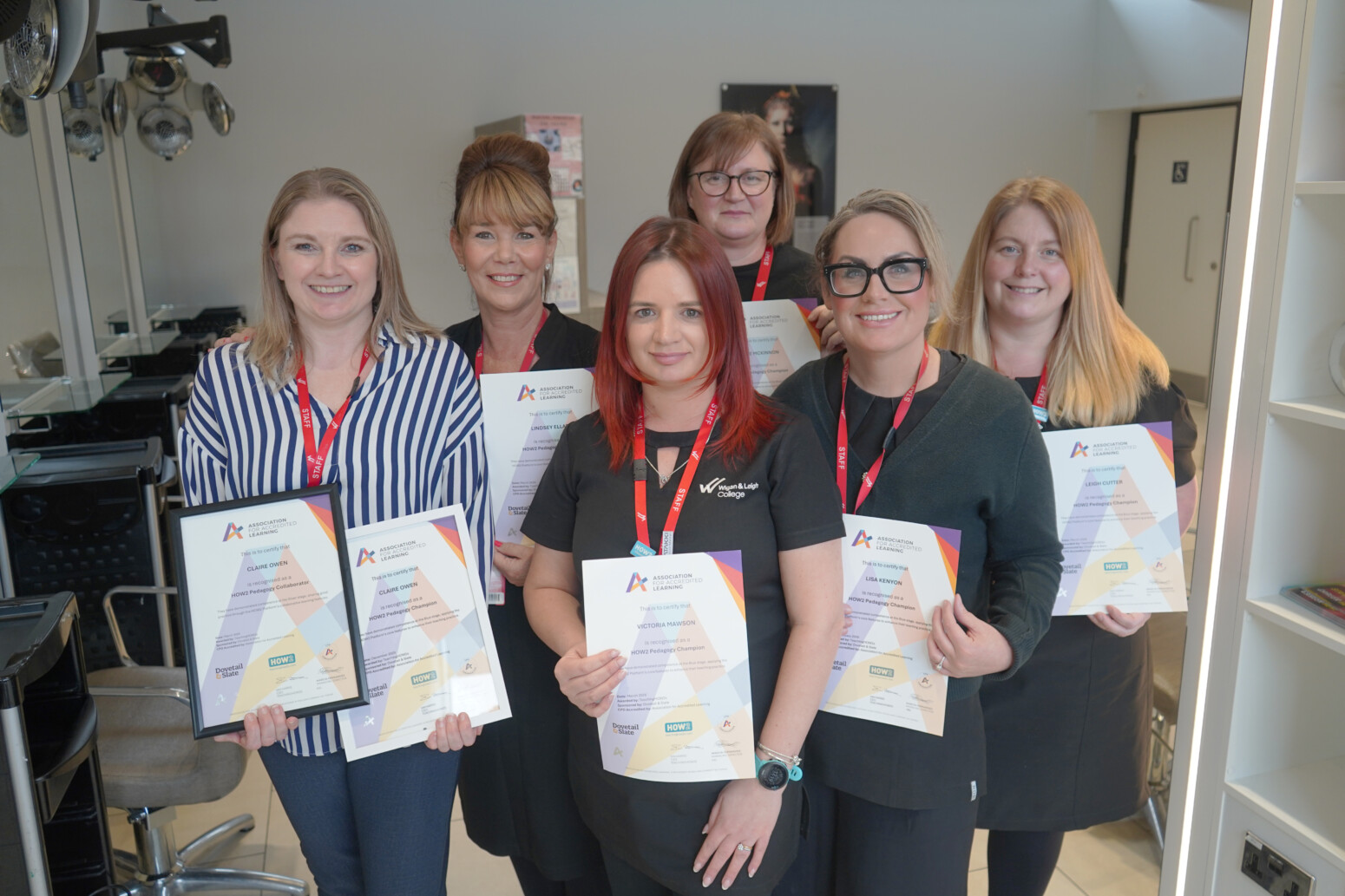
Within the college’s Hair and Beauty department, around 90% of staff have achieved HOW2 Blue Badge accreditation, while curriculum lead Claire Owen is currently working towards Gold Accreditation through leading CPD activity across the college.
Rather than focusing solely on attendance at training sessions, the HOW2 Accreditation Framework recognizes how educators apply strategies in practice, reflect on their development, support colleagues and contribute to wider teaching and learning activity across the organization. For Wigan & Leigh, this has helped create a clearer and more credible pathway for recognizing sustained professional growth across multiple campuses and curriculum areas.
Supporting an Ofsted-Praised ITE Provision
Perhaps the area where the impact of the HOW2 Platform stands out most clearly is within Wigan & Leigh College’s ITE provision. Here, HOW2 has become embedded within the everyday routines of teacher development, helping trainee teachers move more confidently from pedagogical theory into practical classroom and workshop practice from the very beginning of their training.
The success of this approach is reflected in the college’s 2026 Ofsted inspection, where its ITE provision was judged to be operating at a Strong Standard in all inspected areas.
Inspectors highlighted how trainees develop highly relevant teaching knowledge and skills, gain a clear understanding of barriers to learning and strategies to overcome them, and benefit from practical guidance that helps them apply teaching approaches effectively within their own subject areas.
They also praised the way trainees are supported to contextualize theory, practice and refine what they learn, and develop inclusive approaches that meet the needs of learners with barriers to learning.
Ofsted explicitly recognized the use of artificial intelligence to support planning and resource development. Within the college’s ITE provision, this support is provided through the HOW2 AI Assistant, helping trainees adapt their teaching to different learners, subjects and teaching contexts.
For Lee Royle, the findings reflect an approach that helps trainee teachers put theory into practice.“The HOW2 Platform is our secret weapon for ITE,” he explains.“It helps brand-new teachers achieve brilliant outcomes because they can access practical strategies when they need them, adapt approaches to their own teaching environments and continuously build on their practice over time.
The HOW2 Platform is our secret weapon for ITE. It helps brand-new teachers achieve brilliant outcomes because they can access practical strategies when they need them, adapt approaches to their own teaching environments and continuously build on their practice over time.

Lee Royle, Programme Leader for ITE at Wigan and Leigh College and University Centre
From Industry Expertise to Teaching Excellence
What began as part of a wider effort to support educators entering further education from industry has evolved into a more connected professional learning model spanning ITE, coaching, CPD and quality improvement across the organization. By embedding HOW2 throughout the work of the Teaching & Learning Academy, Wigan & Leigh College has created a teacher development pipeline that supports educators from induction and qualification through to sustained professional growth and leadership development.

View Features and Benefits
Latest Case Studies
More Case Studies