
How Telford College Is Building a Developmental Teaching and Learning Culture with HOW2
In the nine months since introducing the HOW2 Platform, Telford College has seen early signs of a cultural shift in how educators learn, collaborate and develop their teaching.
Share:



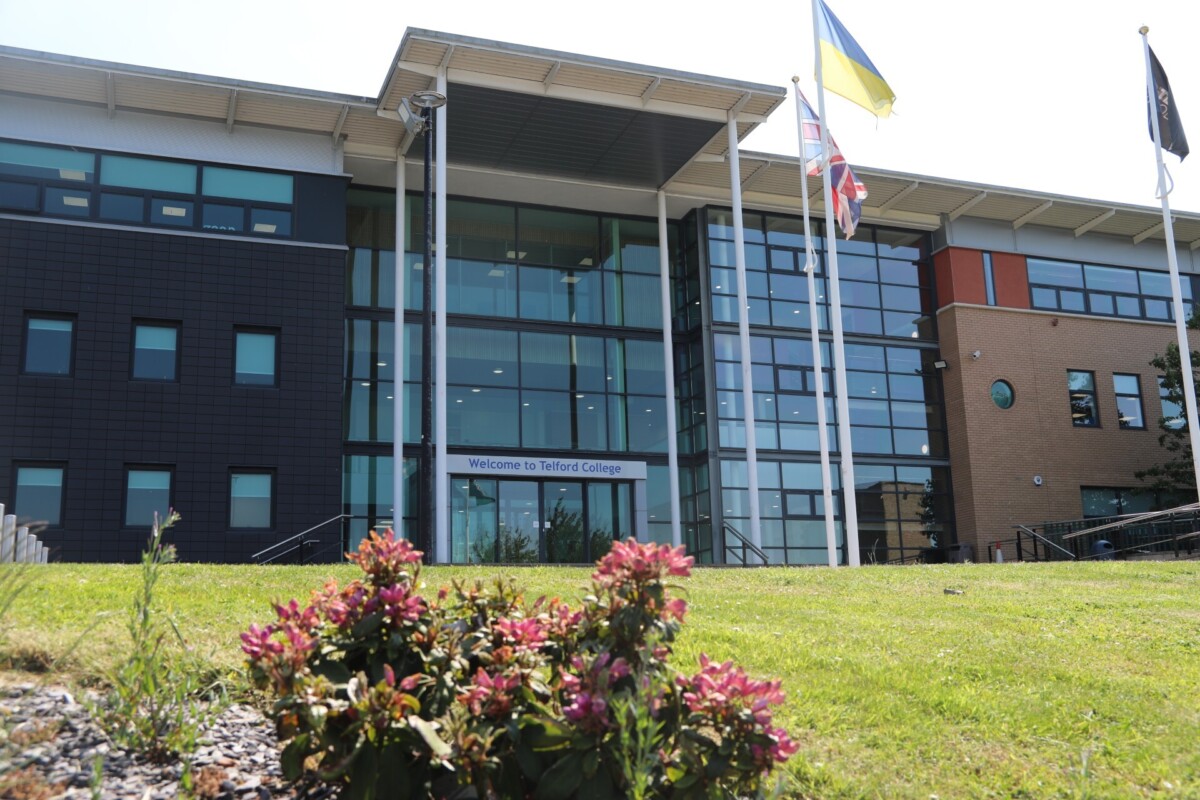
Based in Telford, Shropshire, in England’s West Midlands, Telford College delivers education and training across a broad range of academic, vocational and apprenticeship programmes. Alongside A Levels, the College offers specialist training in areas including construction, engineering, automotive, aviation, and hair and beauty. This breadth is reflected in its teaching workforce, where experienced educators work alongside industry professionals who have often moved directly from the workplace into the classroom.
Since introducing the HOW2 Platform in early 2026, Telford College has been using it to support its focus on developing educators and strengthening teaching practice. While still early in that journey, the College is beginning to see signs of a more supportive and developmental culture emerging, with professional learning and teaching practice becoming more visible and frequent subjects of conversation across the organisation.
Creating a More Developmental Culture
When Emily Thorp joined Telford College as Head of Quality and Performance in November 2025, the College was already beginning to invest in new ways to support educators. Alongside building a new quality team and planning a dedicated Teaching and Learning Hub, Emily and her colleagues began exploring how to give educators greater access to professional development (PD) and pedagogical support.
The College was working on moving away from generic PD sessions, with relatively few opportunities for educators to choose bespoke development activities relevant to their individual needs. The aim was to provide staff with access to support that reflected their own context, priorities and stage of development, rather than relying solely on one-size-fits-all approaches.
This was particularly important given the wide range of experience across the College’s teaching workforce. PD needed to support educators at different stages of their professional development — from experienced teachers looking to refresh and refine their practice to industry professionals building their pedagogical knowledge and skills.
Why HOW2?
Having previously used HOW2 at York College, Emily was already familiar with the role the platform could play in supporting PD. She saw it as a practical way to provide educators with access to relevant, evidence-informed teaching strategies that could be adapted to their own subjects, learners, and teaching contexts.
Central to this was HOW2’s visual approach to PD. Each teaching technique is broken down into clear, step-by-step guidance and presented in multiple formats, allowing educators to quickly understand not only what a strategy is, but how to apply it in practice. For busy teachers, assessors and trainers, this helps shorten the gap between learning about a technique and using it with learners.
For Emily, the platform’s strength lies in this immediacy. Rather than asking staff to work through lengthy training videos, online courses or generic PD sessions, HOW2 provides clear, actionable guidance that educators can put into practice straight away. “HOW2 is such a quick win,” she explains. “It quickly engages people, and teachers value practical ideas they can implement immediately.”
HOW2 is such a quick win. It quickly engages people, and teachers value practical ideas they can implement immediately.

Emily Thorp, Head of Quality and Performance at Telford College
HOW2 as a Coaching Tool
One of the ways HOW2 is becoming embedded at Telford College is through the Learning Review process. As part of her role, Emily reviews lessons, identifies areas for development, and supports educators to strengthen their teaching practice.
For Emily, the recently expanded HOW2 AI Assistant has become an important part of those professional learning conversations. Integrated with HOW2’s evidence-informed teaching techniques, the Assistant helps educators adapt them to their subject, lesson focus, learner needs and teaching environment.
“The HOW2 AI Assistant has been a game changer,” she explains, “particularly when I’m giving feedback following Learning Reviews.”
Rather than simply identifying an area for development and expecting staff to research possible approaches themselves, Emily and other managers use the AI Assistant during follow-up conversations to explore relevant techniques with educators there and then. Whether the focus is questioning, participation or checking understanding, the Assistant connects points raised during the Learning Review to practical teaching strategies, creating a collaborative discussion about what might work for the learners in front of them.
“I’ll simply open my laptop and say, let’s pop it into the AI Assistant, and straight away it comes up with lots of ideas,” she says. “The reaction is usually: wow, that was really quick and easy.”
One example involved Rebecca Mulready, an apprenticeship assessor working in Early Years. Having previously taught in primary education, Rebecca was looking for ways to adapt her teaching approach for older learners and apprentices.
During a coaching conversation, Emily used the HOW2 AI Assistant to explore questioning techniques designed to encourage wider participation and check understanding more effectively.
“The transition from teaching children to working with apprentices and adult learners was a bigger adjustment than I expected,” says Rebecca. “I knew my subject well, but I wanted to find more effective ways to engage everyone in discussions and check understanding. The questioning techniques have helped me involve more learners in sessions and given me greater confidence to try new approaches. HOW2 has become a really useful source of support as I’ve continued to develop my teaching practice.”
The questioning techniques have helped me involve more learners in sessions and given me greater confidence to try new approaches. HOW2 has become a really useful source of support as I’ve continued to develop my teaching practice.

Rebecca Mulready, Early Years Apprenticeship Assessor, Telford College
Supporting Vocational Educators to Develop Their Teaching Practice
Vocational educators bring valuable professional expertise to Telford College, often developed over many years in industry.
For many, moving directly from industry into the classroom means bringing extensive vocational expertise while having limited teaching experience and, in some cases, no formal teacher training — creating a particular need for accessible, practical pedagogical support.
“They may have had no teacher training at all until they arrive,” says Emily. “They’re teaching and learning at the same time.” For Emily, HOW2 helps vocational educators bridge the gap between industry expertise and classroom practice, giving them the support to teach effectively from the outset while continuing to develop in their roles.
“I think for some of them it’s a bit of a lifeline,” she says. “They’re really keen to be good teachers.
Richard Pearson, an automotive lecturer, joined Telford College after a career in industry. Like many vocational educators, he brought significant professional expertise to the role but was looking for practical ways to develop his teaching skills and engage learners more effectively.
“Having spent 23 years working in industry before moving into teaching this year, I have found HOW2 to be an invaluable resource. It has helped me translate my professional expertise into effective classroom practice, providing practical strategies and ideas that support the planning and delivery of engaging, high-quality lessons. As a new lecturer, it has given me greater confidence in my teaching and has played a key role in enhancing the learning experience for my students.”
As a new lecturer, HOW2 has given me greater confidence in my teaching and has played a key role in enhancing the learning experience for my students.

Richard Pearson, Automotive Lecturer, Telford College
Early Signs of Cultural Change
Nine months after introducing HOW2, Emily is seeing signs that teaching and learning is becoming a more visible and frequent part of conversations across the College.
“I’d say that’s the biggest thing at the moment,” she says. “More people are talking about teaching and learning. It is higher on people’s agenda. It’s more of a talking point than it has been previously.”
For Emily, this is one of the clearest signs that a more developmental teaching and learning culture is beginning to emerge. Teaching practice is becoming a focus of everyday professional conversations, with the platform providing a shared language for discussing effective practice.
A Health and Social Care teacher, Molly Williams’ experience is a good example. Having embraced HOW2 as part of her own PD, she has since become an enthusiastic advocate for the platform within her department. What began as support for her own teaching practice has evolved into peer advocacy, with Molly actively encouraging colleagues to explore new techniques and engage with professional learning opportunities.
“She’s become almost obsessed with HOW2,” Emily laughs. “She’s getting other people involved as well.” For Emily, this peer-to-peer enthusiasm shows that engagement with the platform is beginning to spread organically, as educators share techniques, discuss teaching approaches, and encourage colleagues to explore HOW2.
“Molly is working towards her Gold Accreditation, and she has been really proactive in creating a document to share with staff to guide them towards achieving their Blue Accreditation.”
Molly was also a guest speaker on a recent Supporting Teachers webinar, part of the HOW2 Community Webinars programme, hosted by Luke Zwalf from TeachingHOW2s. At Telford College, she has taken on a teaching and learning coaching role and plans to run a HOW2-focused Community of Practice.
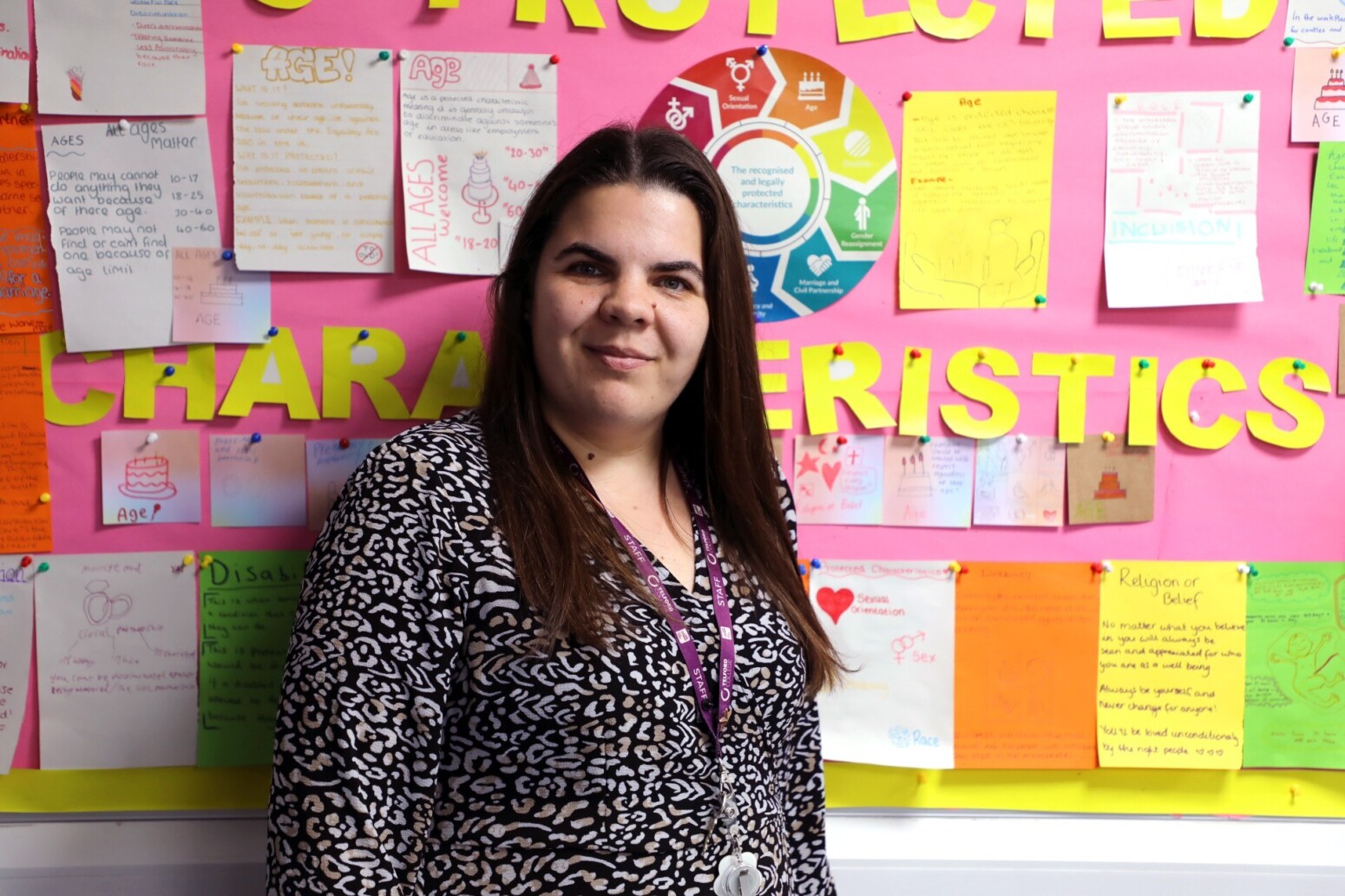
The shift is also becoming visible in the classroom. Through learning reviews and learning walks, Emily and her colleagues are seeing educators put new strategies into practice and experiment with different approaches to engage learners.
“We’re going into lessons, and we’re seeing HOW2 activities happening,” she says. Reflecting on returning to lessons after earlier coaching conversations, she adds: “It’s so nice to go back into a lesson later and spot a HOW2 activity being used. You immediately think, aha, there it is.”
Learning from the Wider HOW2 Community
Beyond the platform itself, the HOW2 community connects educators and leaders through teacher webinars, forums and HOW2 Leads events, alongside ongoing implementation support from the HOW2 team.
Emily has particularly valued the welcome and practical support available through this wider network. “It does feel like a genuine community,” she says. “The networking is really useful, and there are always people you can message and ask, ‘How have you done this?’”
She points in particular to connections with Alison Loughnane at Hopwood Hall College and Bradley Mizon at Capel Manor College, alongside the support provided by Luke Zwalf and Damian Rollinson Small at HOW2. These relationships allow Telford to see how other colleges are using different aspects of the platform in practice and to learn from their approaches to implementation.
“Just hearing about how people use it is the most useful thing,” Emily says, “and how they’ve implemented it, how they’ve promoted it, how they’ve embedded it.”
Looking Ahead
While Telford College is still in the early stages of its HOW2 journey, Emily sees significant potential to build on the momentum already emerging.
Next steps include bringing the planned Teaching and Learning Hub to life, introducing the recently appointed teaching and learning coaches (including Molly Williams), increasing engagement among curriculum managers, and further embedding professional learning within everyday practice.
For Emily, the priority is to build on this early momentum and continue using the platform to strengthen a culture in which educators feel supported to develop their teaching practice and learn from one another. “We’re seeing that some people are getting on it and then encouraging others to get on it,” she says. “It’s like a snowball, isn’t it? You just have to give it time to build and grow.”
At this early stage, Emily believes the College is beginning to see the benefits of that approach. Educators are increasingly engaging with professional learning, applying new teaching strategies and sharing techniques with colleagues.
While there is still work to do, the early signs are encouraging. For Telford College, the goal is not simply to implement a platform, but to build a more supportive and developmental teaching and learning culture. HOW2 has become an important part of that journey.

View Features and Benefits
Latest Case Studies
More Case Studies